

The Silent Chaos of Sharing One WhatsApp Number Across Three Salespeople
Last week a retailer from Guatemala told me something that hurt to hear.
His clothing store has three salespeople. All three share one WhatsApp Business number. On a Friday afternoon, a customer wrote asking if they had a dress in size M in navy blue. All three salespeople saw the message.
Nobody answered.
Not because they were bad at their jobs. Because each one assumed the other two would handle it.
When one finally responded — three hours later — the customer had already bought somewhere else.
The Problem isn‘t That You’re Busy. It’s That Nobody Knows Who Owns the Customer.
Sharing a WhatsApp number across a team sounds practical. One number, everyone connected, no customer left unanswered.
But what it looks like from the inside is something else.
Three people staring at the same chat. One starts typing. Another already replied. The third doesn’t know whether to jump in or wait. The customer gets two different answers — or none at all. The conversation history has no signature. When that customer writes again tomorrow, nobody remembers what was promised, what was said, or whether anyone followed up.
That’s not a sales team. That’s a group chat with no moderator.
What Gets Lost in the Noise
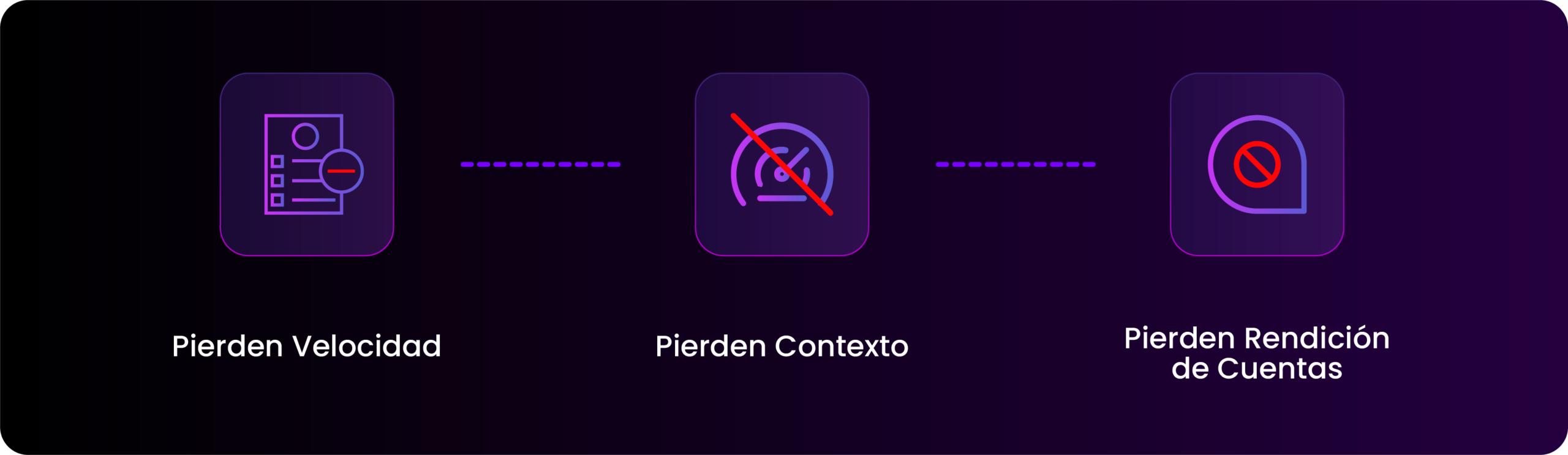
When three salespeople share one WhatsApp, they lose three things at once.
They lose speed.
Response times go up because nobody feels individual urgency to answer. If it’s everyone’s responsibility, it’s nobody’s. Customers in Guatemala and Honduras expect a reply in minutes. Silence for hours is the same as pointing them toward a competitor.
They lose context.
WhatsApp has no customer profiles. No shared history with notes. No way to know that this same number was offered a discount last week, asked three times without buying, or is your highest-value repeat customer. Every conversation starts from scratch — even when the customer shouldn’t have to introduce themselves twice.
They lose accountability.
Who closed that sale? Who left that customer hanging? Which salesperson converts better? With a shared number, there’s no way to know. And what you can’t measure, you can’t fix.
The Damage That Never Shows Up in Reports
There’s a cost that never appears in any spreadsheet: the trust a customer loses when they sense that nobody is actually paying attention.
A customer who writes on WhatsApp isn’t browsing a website with infinite patience. They’re in decision mode. They’ve already weighed their options. They’re ready to buy — or to leave. When they sense confusion on your side — duplicate replies, shifting tone between sellers, contradictory information — your price stops being the deciding factor. Trust becomes the deciding factor.
And trust, once lost over WhatsApp, is hard to recover.
The Answer isn’t to Hire Fewer Salespeople
La respuesta obvia — y equivocada — es reducir el equipo para que haya menos confusión. Menos personas, menos colisiones.
Pero el problema no es cuántos vendedores tienes. El problema es la infraestructura con la que trabajan.
Una bandeja de entrada multi-agente como la de Reach.tools le da a cada vendedor su propio usuario dentro del mismo número de WhatsApp. Las conversaciones se asignan — automáticamente o a mano — con dueño claro. Un cliente que escribe hoy ve al mismo vendedor si escribe mañana. El historial es compartido, pero la responsabilidad está definida.
El resultado: el mismo equipo de tres personas atiende el doble de conversaciones, sin que ninguna se caiga entre las grietas.
What This Looks Like in Practice
Go back to the story from the beginning. The customer writes asking about the navy blue dress in size M.
With a multi-agent platform, the message lands in a shared inbox. If it’s set up with automatic assignment, it goes straight to the available salesperson. That salesperson responds — with their name, their style, with the customer’s history in view. If the same customer writes two weeks later, the system recognizes her and can assign the conversation to the same person.
Three hours of silence becomes thirty seconds of response. The sale that was lost gets closed.
The WhatsApp chaos isn’t a discipline problem. It’s a design problem.
You can have the best sales team in Guatemala and still lose customers because of infrastructure that wasn’t built for teams. The wrong tool turns good salespeople into a bottleneck.
That customer who wrote on Friday afternoon? She still exists. The next time she writes, who’s going to answer?
Insights & Trends