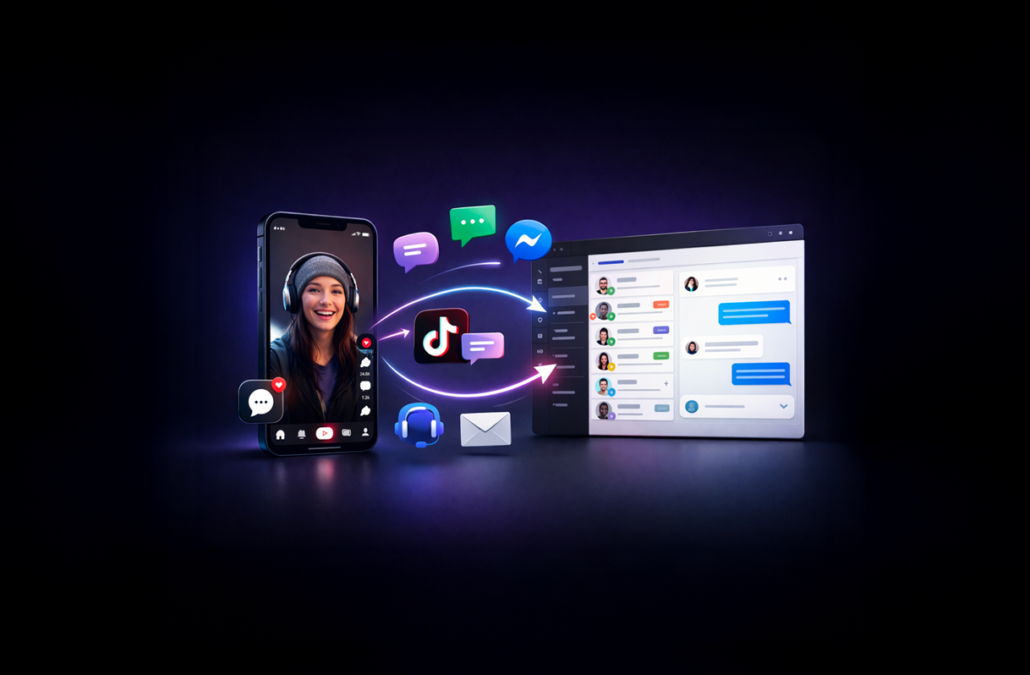
Everything in one inbox—switch apps less, avoid shared passwords, and keep every conversation tracked.
Here’s what this changes in practice:

A customer sees your product in a TikTok video. They like it. They comment. They send you a direct message asking for price and availability. And that message falls into a void because no one on your team has TikTok open, because it’s not connected to anything, because the person who manages social media is on vacation and is the only one with the password.
As a result, that same customer has already found someone else who did reply.
That scenario repeats thousands of times every day in Latin America.
Not because businesses don’t want to respond — because their tools don’t let them.
TikTok stopped being the app where teenagers did dances. In LATAM, it became a product discovery channel with a power few anticipated.
People don’t just watch content — they search for products, compare brands, make purchase decisions. And when they decide they want something, they send a message.
However, unlike WhatsApp or Instagram, where many businesses already have support workflows, TikTok has been the orphan channel — the one that generates demand but has no infrastructure to capture it.
That changes now.
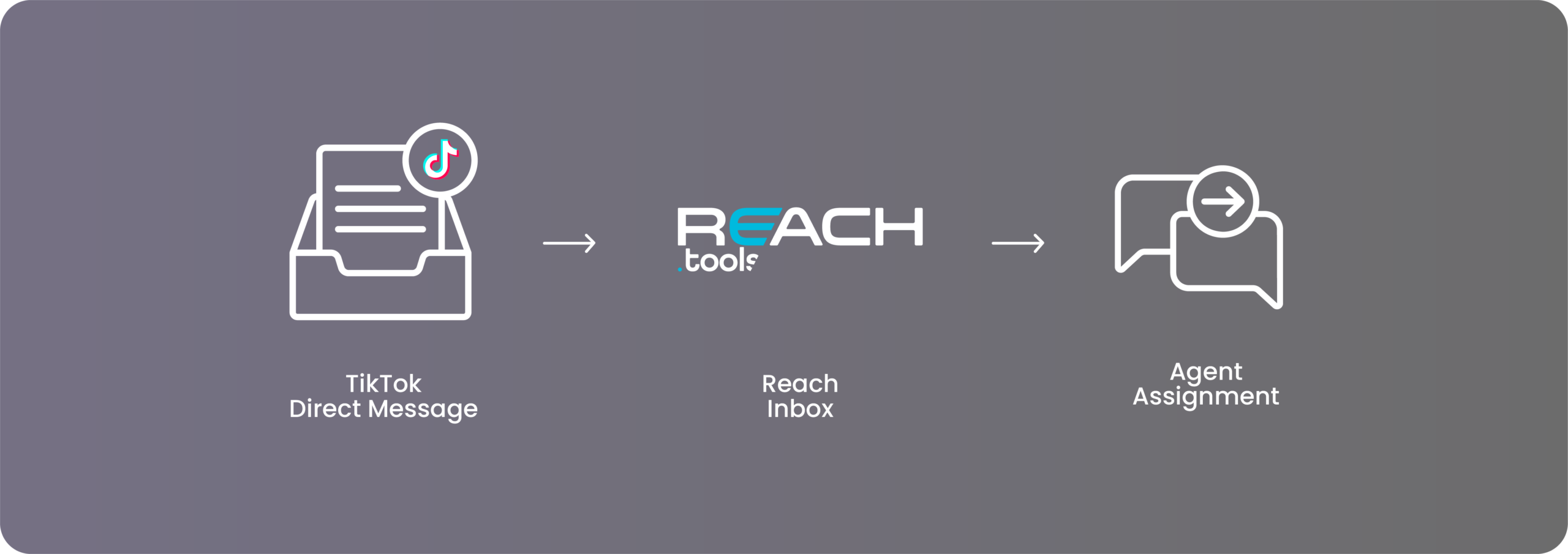
We’re adding TikTok as an integrated channel inside Reach. That means the direct messages you receive on TikTok will appear in the same inbox where you already see WhatsApp, Instagram, Facebook Messenger, and webchat.
A customer who discovers you on TikTok and later writes on WhatsApp appears as the same person. Their history, context, and preferences — all in a unified profile. Your agent doesn’t start from zero.
TikTok messages enter the same routing system you already use. They’re assigned by availability, not by someone manually checking the app.
You can now measure response times, conversation volume, and conversion rates on TikTok with the same granularity as your other channels. No data, no decisions. With data, you can justify your content investment.
Your bots and automated flows work on TikTok just like on WhatsApp — instant replies, routing, everything available the moment a customer writes.
The temptation is to think of TikTok as “just another channel.” A box to check on your digital presence list.
But businesses winning in conversational commerce understand something different: every channel you don’t connect is a leak of customers you already did the work to attract.
Think about it, you invested in content, recorded videos, built an audience, got someone to stop, watch your product, and care enough to message you.
All that effort — creativity, time, ad budget — reaches its moment of truth when the customer sends a message.
If that message reaches no one, everything before it was wasted.
This isn’t a marketing problem. It’s an infrastructure problem.
LATAM brands already managing multiple channels in Reach report something consistent: when they add a new channel to the unified inbox, the volume of conversations handled goes up — but operational effort doesn’t increase proportionally.
The reason is simple. When your agents already work in a centralized platform, adding a channel is like opening another door to the same building. Processes already exist.
Routing rules are already defined. Training is minimal because the interface is the same.
The cost of not doing it is higher. Managing TikTok separately means another app open, another parallel process, another place where conversations get lost.
There’s a pattern that repeats with every messaging channel that becomes relevant for business. First it’s personal. Then people start looking for brands there. Then brands realize they need a presence. And in the end, the winners are those who integrated the channel into their operation — not those who managed it as a silo.
The difference is that now you don’t have to wait for someone to build the integration. It’s already here.
If you already use Reach, the TikTok integration will be available soon. Here’s how to get ready:

Verify who has credentials, that permissions are in order, and the account is active. You don’t want access issues the day you’re ready to connect.
If you’re already posting, prepare for an increase in direct messages. If you’re not, this is a good time to start — now with the certainty those messages will reach your team.
Will TikTok messages go to the same team as WhatsApp? Do they need a different approach? Are there products or campaigns that will generate volume from TikTok? Decide before, not during.
They don’t need to learn a new tool. They need to know they’ll start receiving messages from a new channel in the same platform. Context, not training.
When we started Reach, the promise was simple: no customer conversation gets lost because it’s in the wrong channel, at the wrong time, without the right person to answer it.
TikTok is the next door we’re opening. Not because it’s trendy — because your customers are already knocking there, and they deserve someone to open.
TikTok integration in Reach will be available soon. If you want to be among the first to activate it, contact us.